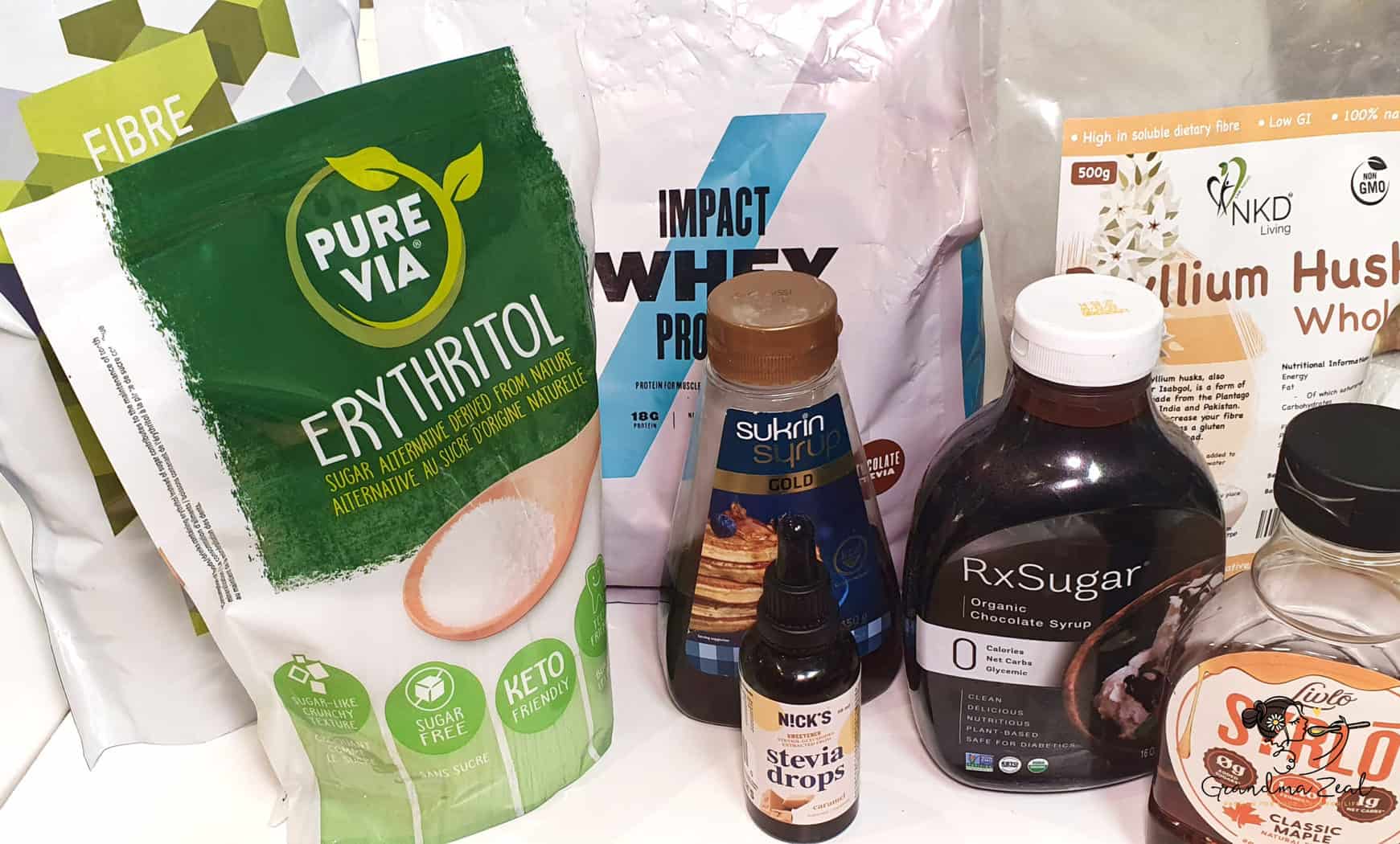
If you’re new to the low-carb lifestyle or want to cook and bake healthier at home, stocking your kitchen with the right ingredients is key. This guide to my low-carb pantry essentials provides a practical list of the ingredients I always have on hand, along with tips and personal insights from my own journey.
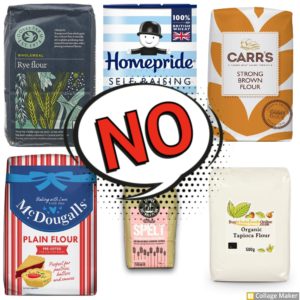
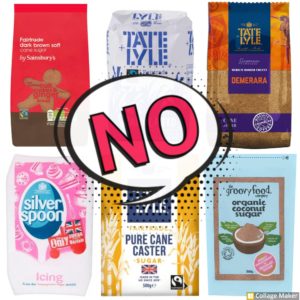
Ordinary flour and sugar don’t work in a low-carb or keto diet. Why? They’re high in carbohydrates and raise blood sugar levels, which can knock the body out of fat-burning mode (ketosis). You can learn more about keto, ketosis, and low-carb basics here.
I am not a doctor or professional nutritionist. I share my experience (I explored this lifestyle through trial, error, and years of cooking for my family) and knowledge. If you are in doubt or have some health concerns, consult with your doctor before making any dietary changes.
That said, I love this way of eating. It’s helped me feel better, eat more mindfully, and still enjoy real food, especially baking.
Yes, You Can Still Bake On Low-Carb!
When I first started changing the way I ate, I assumed baking was over. No more cakes, no more bread, no more comfort. But that wasn’t true at all. Once I began learning how to use a few new ingredients and stocked up on my core low-carb pantry essentials, everything started to fall into place.
The first real challenge was bread. It took me a few months of experimenting to come up with a recipe that actually worked. I was determined to make something my husband would enjoy, and eventually, I did. The texture was soft, the flavour was close to what we were both used to, and it held up well in sandwiches.
I remember one day we went hiking with friends, and I packed those sandwiches. No one noticed anything unusual. In fact, they complimented the bread. When I told them it was homemade and completely grain-free, they were genuinely surprised. My son, who’s usually quick to detect “healthy” swaps, ate his without saying a word. That felt like a small win.
That’s the power of having the right low-carb staples in your kitchen. It gives you the freedom to create food you feel good about serving and eating.
List of Healthy Low-Carb Staples
As I mentioned earlier, to create keto and healthy low-carb goodies, you need a few ingredients that differ from those used in traditional cooking or baking. Some of them you can get in your local shop, but some have better prices or availability online.
Over time, I’ve narrowed down the low-carb baking ingredients that actually work, whether I’m making fluffy rolls, moist cakes, or something experimental.
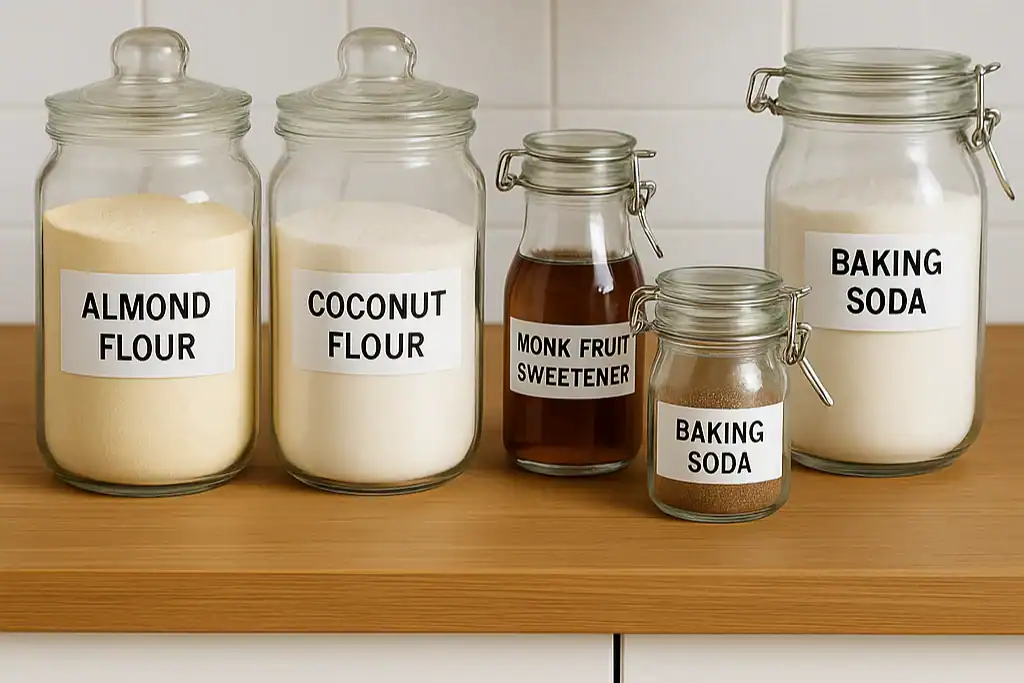
Flours and Fibre for low-carb baking
- Oat fibre or potato fibre – Not to be confused with oat bran or flour. This is pure fibre, meaning zero carbs, and brilliant for adding structure to bread.
- Psyllium husk – It’s another fibre that gives bread a more natural texture. Also great for thickening soups and sauces. Find out more about fibre.
- Almond flour – Full of healthy fats, vitamin E and magnesium. It gives a lovely texture to cakes and biscuits.
- Coconut flour – Gluten-free, high in fibre and protein. Absorbs a lot of liquid, so you only need a small amount.
All those ingredients have a low glycaemic index and are your low-carb pantry essentials.
Stay in touch
If you like the content, subscribe to my monthly newsletter for updates about new articles.
I promise – no spam, no inbox flooding.
Sweeteners for your keto pantry list
Since sugar is a no-no! We need a sugar substitute, such as a sweetener. There are many of them, but the key is choosing the one that suits your taste, baking style, and works well with your favourite low-carb baking ingredients. They have different strengths in terms of sweetness, taste, and texture.
Sweeteners I trust and use:
- Erythritol is my go-to for cakes and biscuits. Available in granulated and powdered forms, as well as in a ‘gold’ version to substitute for brown sugar. Affordable and easy to find.
- Monk fruit sweetener is a natural option with a clean, sweet taste.
- Allulose is smooth and excellent for frostings and syrups, with no cooling effect.
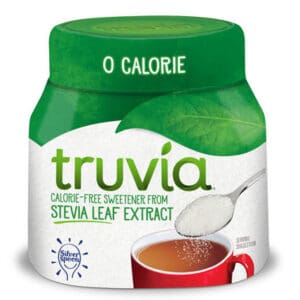
- Truvia – A stevia-based blend, very accessible.
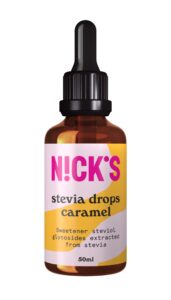
- Stevia drops – Ideal for frostings, homemade chocolate, pancakes, and smoothies. I love the vanilla and caramel-flavoured drops from N! CK’s.
- Walden Farms maple syrup – A zero-calorie, sugar-free syrup that works well on pancakes or in baking. The taste is lighter than traditional syrup but perfect for low-carb use.
Everyone has favourites in their keto pantry list—these sweeteners are mine. They keep my cakes light, my frostings smooth, and my cravings in check.
Other sweeteners:
- Sukrin syrup – A brilliant substitute for honey, available in gold, caramel, and maple flavours.
- Sukrin Gold – A brown sugar alternative I often use in biscuits and crumbles.
- Yacon syrup – A natural sweetener made from yacon root. It has a rich, molasses-like flavour and is lower in carbs than regular syrup, though it’s best used in small amounts.
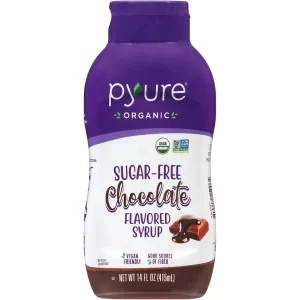
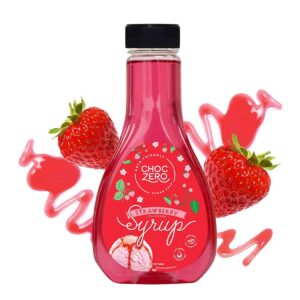
Other brands, such as ChocZero or Pyure Organic, offer chocolate, strawberry, or vanilla syrups that work great for desserts. The key is choosing the one that suits your taste and baking style.
NOTE:
We use artificial sweeteners because they add very few calories to our diet and do not impact blood glucose levels. Compared to the amount of sugar typically used for sweetness, only a small portion of artificial sweetener is needed.
Other Keto Cooking Basics
- Baking powder (I prefer gluten-free)
- Baking soda
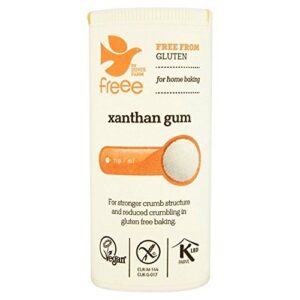
- Xanthan gum (helps bind gluten-free doughs)
- Unsweetened cacao or cocoa powder
- Protein powder (for adding structure or boosting baking recipes)
- Cacao butter (essential for homemade chocolate or ganache)
- Mascarpone
- Cream cheese
- Double cream
- Unsalted butter
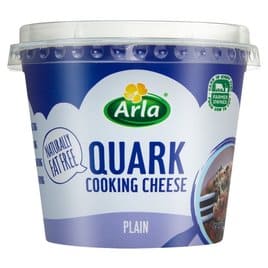
- Cottage cheese or quark
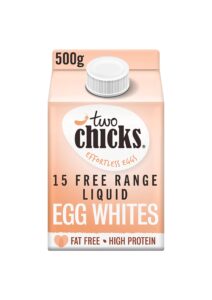
- Egg whites (carton or fresh)
- Almond milk or other dairy-free milk (unsweetened)
These ingredients comprise the rest of my low-carb pantry essentials, enabling me to create everything from garlic bread to creamy cheesecake easily.
Cacao vs Cocoa – Not Quite The Same
People often ask about Cacao and Cocoa, as they think it’s the same. But is it? There are many references on the internet. This is how the companies selling cacao and cocoa products explain the differences:
‘Cacao’ refers to any food products derived from the cacao beans that have remained ‘raw’. E.g., cacao nibs, cacao butter, cacao mass or paste and cacao powder. Raw cacao powder is made by cold-pressing unroasted cocoa beans, a process that retains the living enzymes and removes the cocoa butter fat.
On the other hand, ‘Cocoa’ looks the same; however, there is a difference. Cocoa powder is made of cacao beans roasted at high temperatures. Roasting alters the molecular structure of the cacao beans, reducing their overall nutritional value and compromising some of their health benefits.
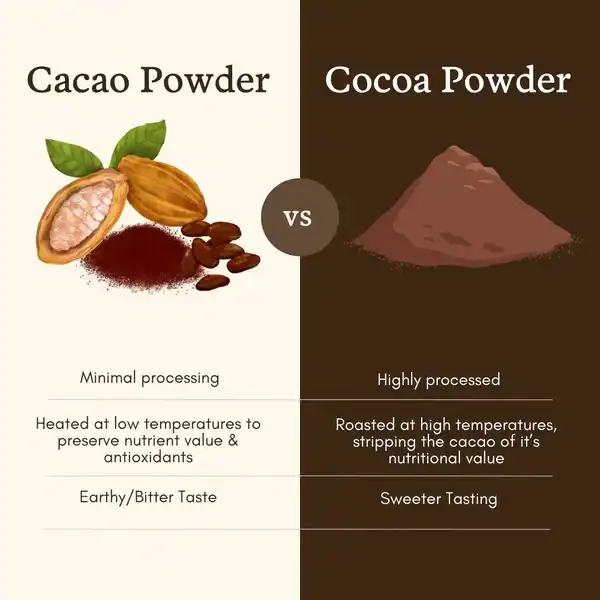
But as I said, many people think Cacao and Cocoa are the same thing, with different spellings.
From my experience, cacao is lighter and more natural, with a bitter flavour, and I prefer it for baking. Cocoa is darker, less bitter and pleasant in drinks and homemade chocolate as it needs less sugar.
🧂 Stocked Your Low-Carb Pantry Essentials or Have Questions?
✍️ Leave a comment below and tell me—what’s in your low-carb larder?
📣 Don’t forget to share this post if it helped you!
Explore Recipes
If you’re looking for inspiration to use your low-carb pantry essentials, I’ve shared plenty of bread, cake, and everyday meal ideas throughout the blog—feel free to explore.
What would you like to read now?
There’s more here: favourite places, personal stories, broken food myths, recipes and more.
Either way, I’m glad you’re here.